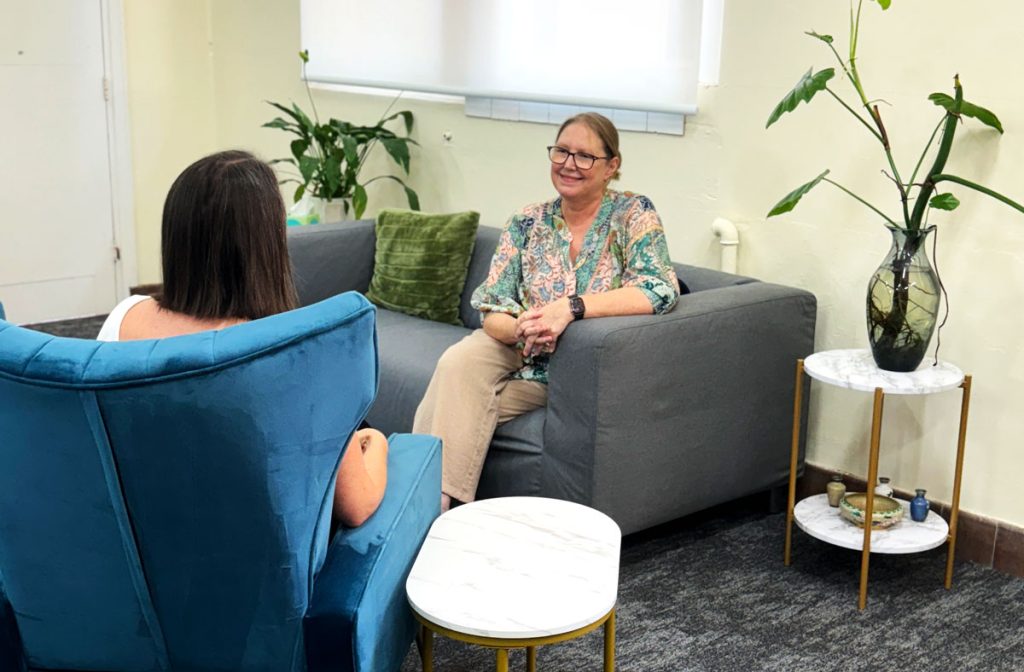
A vital part of Karuna’s multidisciplinary Community Services team is Dr Wendy: our specialist palliative care doctor.
Dr Wendy works closely with our dedicated team of nurses, social workers, and spiritual care practitioners to provide care to Karuna patients and families. She delivers care that acknowledges all of their needs, no matter what stage of the palliative journey they are in.
Learn more about what a typical day in Dr Wendy’s life at Karuna looks like…
Every day starts with Morning Connection
Morning Connection is an opportunity for the team who is on that day to check-in with each other. It’s an important moment for us to pause and connect before everyone goes out to do their work. It reminds us of our values. To treat everyone with kindness and respect. And approach situations with courage and humility.
For Morning Connection, we might share a quote, a story, a poem, a video… Anything that feels relevant to what is going on that day, or what we have been experiencing lately.
On Tuesdays, we also have a ‘Death Reflection’
This is a time for us to reflect on the patients who have died in the last week. Who they were. Who was supporting them at the end. What was important to them. What we could have done better, what we thought we did well. How we connected.
A normal day may then involve…
- 1:1 Consultation with patients and families
This may be done on the phone or via Telehealth (video call). Telehealth is a great way to check-in with patients and assess how they are feeling. We can discuss their symptoms and any concerns they have. And together with their carers and family members, we can decide on the best way to manage those symptoms. Telehealth also allows me to respond quickly to people that need urgent support. Situations that I could not have supported otherwise, if I had to drive to every home.
- Home visits to patients… however many are needed
If a patient and family will get the most value from face-to-face support, I visit them at home. This helps me better understand complex situations. Sometimes, I visit with another member of the Karuna team, such as one of our specialist nurses, social workers or spiritual care practitioner. This helps us to address different needs together.
- Pain and symptom management
After talking to or visiting patients, I often need to write scripts for medication that will ease symptoms. Or sign paperwork that will support the needs of patients and families. My goal is always to support the patient, and their carers or family members, in whatever way is best for them.
- Building relationships with specialists or other medical teams
We have regular meetings with medical teams from local hospitals, so that we can all provide the best care for patients. This helps to keep their care seamless and as stress-free as possible.
We also work with a variety of Allied Health Professionals to provide additional care, such as occupational therapy. Patients benefit from all of these different specialties to be holistically well-supported. We need it all to be well-supported. One person, or one team, can’t do everything.
- Responding to whatever comes in during the day
I’m on call to answer questions from the nurses. Or talk through patient and family needs with the social workers and spiritual care practitioner. Sometimes I think it’s a sign of success when I don’t see the patient. When I can just be there in the background offering support.
We all have something to offer. Something that is essential to holistic end-of-life care. It’s about figuring out how we can work together. They support me as much as I support them – it works both ways, all the time.
The care Dr Wendy provides to Karuna patients, carers, and families every day is made possible thanks to the generosity of our supporters. People just like you. Your donation today means no family faces end of life without expert and compassionate support.